Global Gemology & Appraisals - Premier Jewelry Valuation Services
  • HOME
  • QUALIFICATIONS
  • SERVICES
    • APPRAISALS
    • APPRAISAL REVIEW
    • VIP APPRAISAL CONCIERGE
    • EXPERT WITNESS & LITIGATION SUPPORT
    • SELL YOUR JEWELRY
  • CLIENTELE
    • ATTORNEYS
    • ESTATE PLANNING PROFESSIONALS
    • VIP & CELEBRITY CLIENTELE
    • LAW ENFORCEMENT AGENCIES
    • INSURANCE COMPANIES
    • INDEPENDENT JEWELERS
    • INDEPENDENT APPRAISERS
  • SHOP
    • ONLINE BOUTIQUE
    • EQUIPMENT & SUPPLIES
  • ARTICLES
    • "REAL OR REPLICA?"
  • GEMOLOGY
    • GEM ENCYCLOPEDIA
    • THE ART OF GEMOLOGY

ZIRCON

Picture
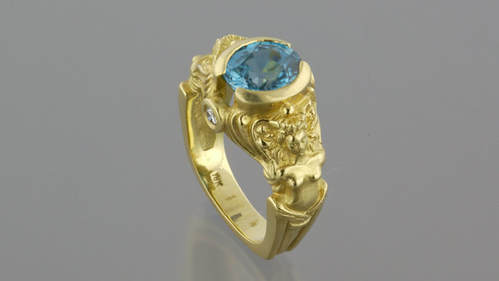
A custom pentagonal step cut natural blue zircon and diamond designer pendant in palladium
A blue zircon and diamond pendant
Species:  Zircon
​​Mohs Hardness:  6 to 7.5 out of 10
Color:  Nearly all colors.
RI:  1.930 to 1.987
Birefringence:  Can be as high as 0.059 (strong doubling)
SR/DR/AGG:  DR
Clarity Type:  Type II
Optic Character:  Uniaxial positive
Spectrum:  Varies with color
Fluorescence:  Varies
SG:  3.90 to 4.73
Routine Treatments:  None
Additional Enhancements:  Heating

Zircon Facts

Picture
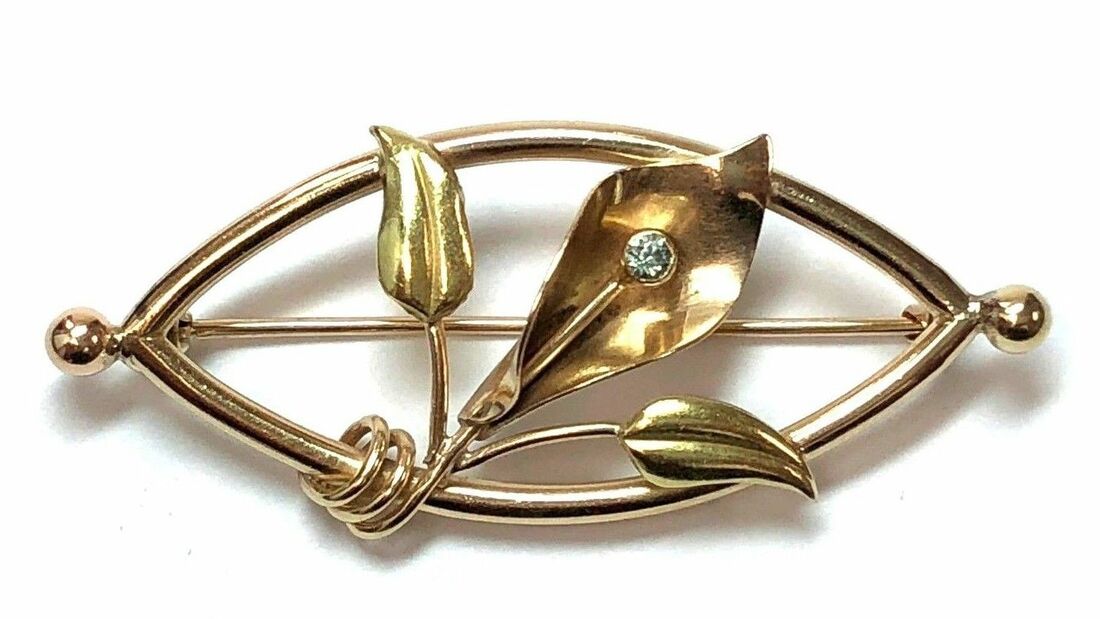
Art Nouveau Era antique brooch featuring a blue zircon set in rose gold and green gold
Art Nouveau Era blue zircon brooch

Zircon is a naturally occurring gemstone available in a stunning array of colors.  Despite its beauty and historical significance, it is often unfairly confused with cubic zirconia, a completely unrelated, man-made material.

Unlike cubic zirconia, which is singly refractive, zircon has a high level of birefringence, meaning light passing through the gem is split into two rays, creating a distinctive eye-visible doubling of facets.  This optical effect contributes to zircon's exceptional brilliance and strong dispersion, rivaling even some of the finest gemstones.

One of the most sought-after varieties, blue zircon, has been prized for its vivid color and high brilliance since the 1800s.  It was particularly popular during the Victorian Era (circa 1837–1901) and frequently used in antique jewelry designs.  Although it does rarely occur naturally, most blue zircon owes its color to heat treatment.

Zircon is found in numerous locations worldwide, with different regions producing distinct colors. Below is a breakdown of zircon colors and their sources:
​
  • Blue – Cambodia, Sri Lanka, Myanmar (Burma)
  • Champagne – Tanzania (Tunduru region)
  • Chartreuse – Nigeria
  • Colorless – Cambodia, Sri Lanka
  • Green – Sri Lanka, Myanmar (Burma), Nigeria, Tanzania
  • Grey – Nigeria
  • Orange-Brown – Cambodia, Nigeria, Vietnam
  • Peachy-Pink – Australia
  • Purple-Pink – Tanzania
  • Raspberry – Tanzania (Tunduru region)
  • Red – Tanzania
  • Reddish-Brown – Vietnam
  • Yellow – Sri Lanka, Tanzania, Nigeria

Zircon is one of December’s birthstones, offering a naturally radiant alternative to other gems.  Whether in antique settings or modern designs, its brilliance and vivid hues make it a captivating choice for any jewelry collection.
  • HOME
  • QUALIFICATIONS
  • SERVICES
    • APPRAISALS
    • APPRAISAL REVIEW
    • VIP APPRAISAL CONCIERGE
    • EXPERT WITNESS & LITIGATION SUPPORT
    • SELL YOUR JEWELRY
  • CLIENTELE
    • ATTORNEYS
    • ESTATE PLANNING PROFESSIONALS
    • VIP & CELEBRITY CLIENTELE
    • LAW ENFORCEMENT AGENCIES
    • INSURANCE COMPANIES
    • INDEPENDENT JEWELERS
    • INDEPENDENT APPRAISERS
  • SHOP
    • ONLINE BOUTIQUE
    • EQUIPMENT & SUPPLIES
  • ARTICLES
    • "REAL OR REPLICA?"
  • GEMOLOGY
    • GEM ENCYCLOPEDIA
    • THE ART OF GEMOLOGY